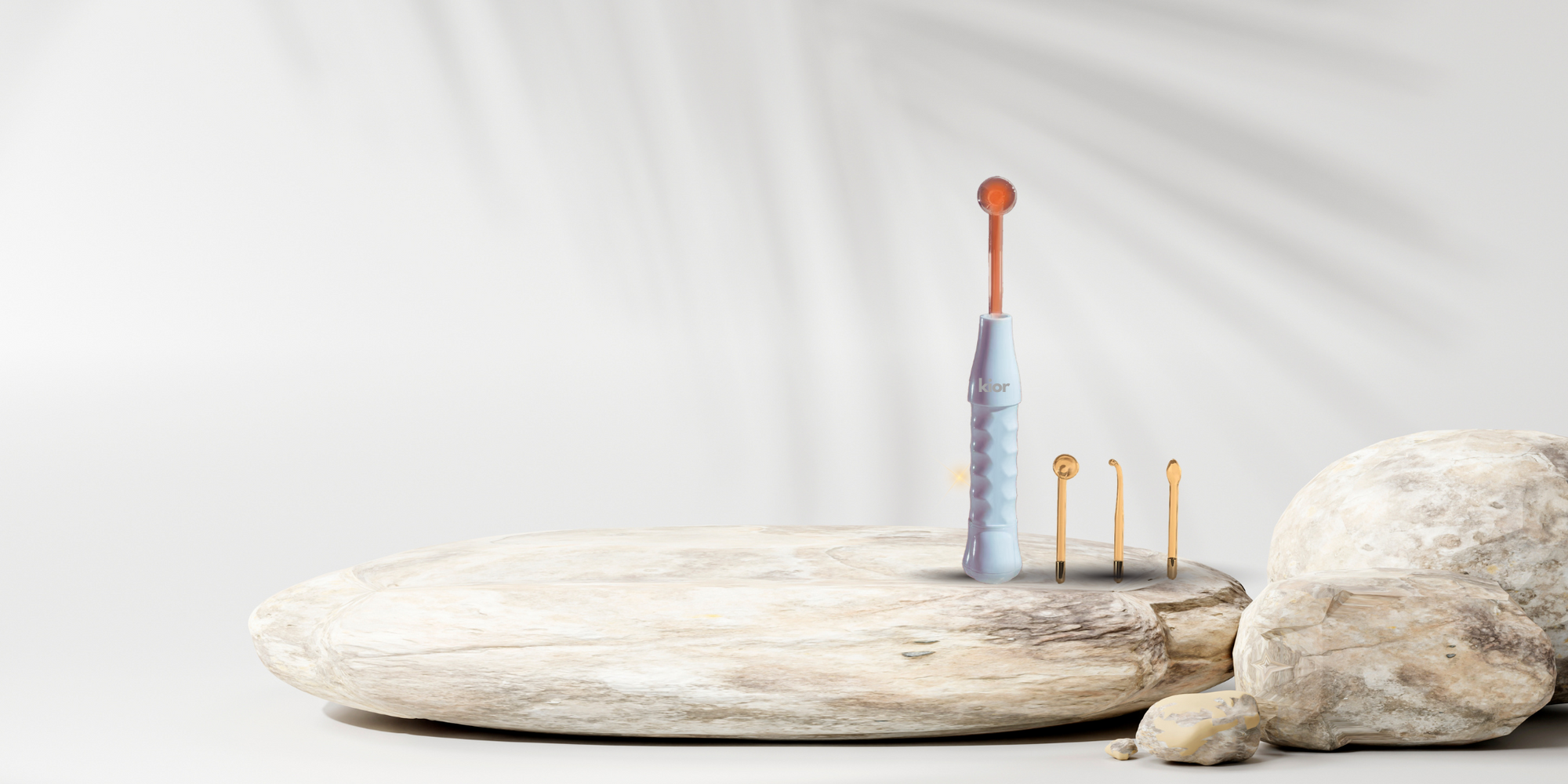
The best high frequency wand for sensitive skin is one you can turn down very low, with orange-glow (neon) electrodes and a choice of small electrodes so you only treat where you need to. Always patch test first and keep sessions short, whichever wand you choose.
Sensitive skin reacts more easily to heat, friction and new products, so the way a wand lets you control intensity matters more than how strong it can go. Below are the criteria worth checking before you buy, and how the Kior Ozone High Frequency Wand measures up against them.
What should you look for in a high frequency wand for sensitive skin?
Four things: adjustable low intensity, the electrode glow colour, the types of electrodes included, and clear safety instructions. A wand that gets all four right lets you start gently and build up slowly.
Why does adjustable low intensity matter?
Sensitive skin usually does best when you start at the gentlest setting and increase gradually. Look for a dial that goes down low, ideally a stepless dial rather than a few fixed levels, so you can fine-tune it to what feels comfortable.
On the Kior Ozone wand the dial is stepless. The first third of the dial is the low range, which is where sensitive skin should start.
Is an orange or violet wand better for sensitive skin?
Orange-glow (neon) electrodes are generally regarded as gentler than violet (argon) electrodes and are often recommended for sensitive and mature skin. Violet is commonly chosen for oily, blemish-prone skin. If your skin is easily irritated, orange is the usual starting point. Read more in Orange vs Violet High Frequency Wand.
Which electrodes are most useful for sensitive skin?
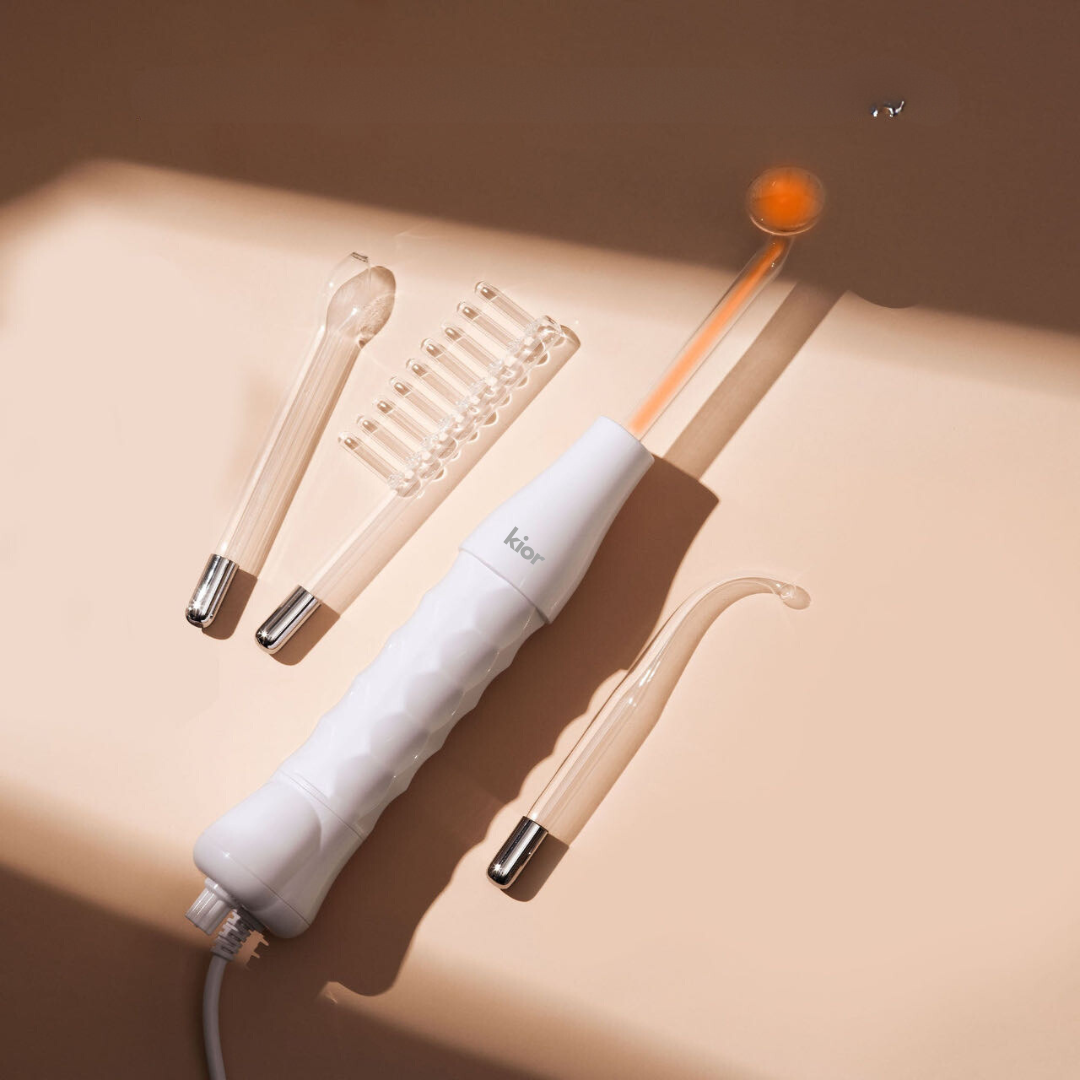
Small electrodes give you control. A mushroom electrode glides over the face, and a bent probe lets you treat a single spot without touching the skin around it. A spoon electrode follows the contours of the face and neck, and a comb electrode is for the scalp.
The Kior Ozone wand includes all four: mushroom, spoon, bent probe and comb.
Why should you patch test a high frequency wand?
A patch test shows how your skin responds before you treat your whole face. Use the wand on a small area, such as the side of the jaw, at the lowest setting for about 30 seconds, then wait 24 hours. If there is no lasting redness or discomfort, continue on a low setting.
What safety information should come with the wand?
A good wand comes with clear instructions and contraindications. Do not use a high frequency wand on broken, irritated or sunburned skin, near the eyes, or near water. Do not use one if you have a pacemaker or another implanted electronic device, and check with a healthcare professional first if you are pregnant or have a medical condition.
Is the Kior Ozone wand a good fit for sensitive skin?
It meets the criteria above: a stepless dial with a low range, orange-glow electrodes, four interchangeable glass electrodes including the mushroom and bent probe for small areas, and a manual with safety guidance. It also comes with 30-day returns and a 1-year warranty. Other wands can meet these criteria too, so compare them on the same points.
Customers with sensitive skin have shared their experience. One wrote: "I also have sensitive skin that reacts to EVERYTHING. This never caused any dryness or flaking and my skin had no issues with it." (Jaxon R., verified buyer). Individual results vary.
Browse the high frequency wand collection, or see how to use a high frequency wand on sensitive skin.
FAQ
Can you use a high frequency wand on sensitive skin?
Many people with sensitive skin do. Start at the lowest setting, patch test first, and keep sessions short. Avoid broken or irritated skin.
How often should sensitive skin use a high frequency wand?
Start with short sessions two or three times a week, and follow the included instructions. Use it less often if your skin feels dry or irritated.
Is a high frequency wand a medical treatment?
No. It is an at-home cosmetic skincare tool. Talk with a dermatologist about ongoing skin concerns.